
 See My Latest Article on HelloNation
What makes a Margherita pizza different?
A Margherita pizza is built around a small group of ingredients: tomato, mozzarella, fresh basil, olive oil, and a plainly seasoned dough. Its identity comes less from a long topping list than from balance, heat, and the quality of each component.
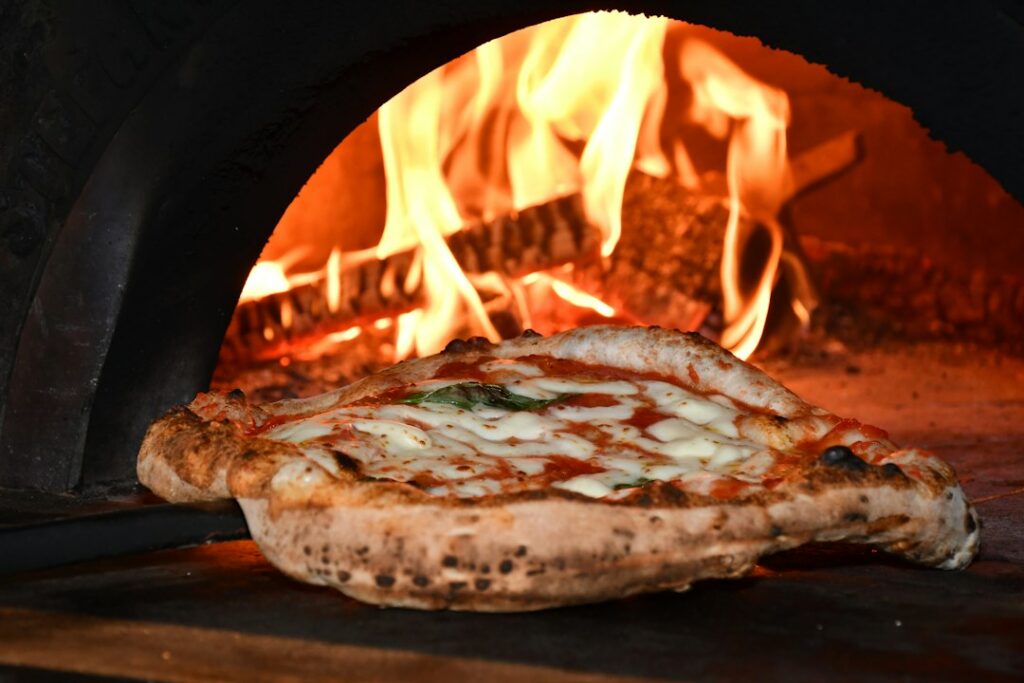
Traditional versions are usually associated with a thin, soft-centered crust, a puffy edge, lightly applied tomato, and cheese distributed so that the finished pizza remains moist without becoming heavy. In coal-fired and other high-heat ovens, the crust may develop dark spots and a toasted aroma while the center stays tender.
For local residents choosing a simple pizza in Pigeon Forge, this style can be useful as a reference point. Because it has relatively few toppings, the dough, tomato flavor, cheese texture, and cooking method are easy to notice.
Where did the name come from?
The familiar story connects the pizza to Queen Margherita of Savoy during a visit to southern Italy in 1889. According to the popular account, a pizza maker prepared a pie using red tomato, white mozzarella, and green basil to reflect the colors of the Italian flag. The pizza was then associated with the queen’s name.
That story is widely repeated, but historians have questioned whether the combination was truly invented for that visit. Similar tomato-and-cheese pizzas appear to have existed before 1889, meaning the royal connection may have helped popularize or rename an already developing style rather than create it from nothing. The Associazione Verace Pizza Napoletana has also acknowledged that ingredients now associated with the Margherita appeared in earlier pizzas. ([pizzanapoletana.org](https://www.pizzanapoletana.org/en/storia_avpn?utm_source=openai))
The most accurate explanation is therefore more cautious: the name became linked with the queen in the late nineteenth century, while the underlying ingredients had deeper roots in local pizza traditions.
How did the recipe evolve?
Early pizza was shaped by affordability and availability. Flat dough, tomatoes, oil, herbs, and cheese could produce a satisfying meal without expensive meat toppings. Over time, techniques became more consistent, and the Margherita came to represent a restrained style in which each ingredient remains visible.
The recipe evolved in several ways:
- Tomato moved from a simple sauce toward carefully crushed or strained preparations.
- Cheese choices expanded between cow’s-milk mozzarella, often called fiordilatte, and buffalo mozzarella.
- Basil shifted from a general herb garnish to a defining fresh aroma.
- Dough fermentation became more carefully controlled.
- High-temperature baking became central to the expected texture.
These changes did not replace the basic idea. Instead, they refined the relationship between a lightly topped dough and a very hot oven.
Why does coal-fired cooking matter?
Coal-fired cooking can influence the flavor and structure of a Margherita pizza, although the oven alone does not determine whether a pizza is traditional. The fuel creates intense heat and can contribute roasted, smoky, or toasted notes, especially around the crust.
A coal-fired oven may also produce:
- A blistered outer edge
- Faster browning on exposed dough
- A firmer underside
- More pronounced toasted aromas
- A contrast between crisp edges and a soft center
The result can vary with oven temperature, coal placement, cooking time, dough hydration, and the skill of the person managing the bake. Two pizzas with identical ingredients may taste different if one is cooked in a slower oven and the other is exposed to very high heat.
For households in Pigeon Forge, seasonal conditions can also affect dough preparation. Humidity, indoor heating, and changes in kitchen temperature influence how quickly dough ferments and how much flour it absorbs. Those factors matter more than many casual diners expect, particularly when preparing pizza at home.
Is every tomato-and-mozzarella pizza a Margherita?
No. The name is commonly used in a broad everyday sense, but a traditional Margherita has a recognizable structure. Tomato, mozzarella, basil, and olive oil are the central elements, and the toppings are generally applied with restraint.
A pizza may still be delicious while differing from the traditional model. Examples include:
- Extra cheese covering the entire surface
- Dried basil replacing fresh basil
- Garlic, meats, vegetables, or multiple additional toppings
- A thick, heavily enriched crust
- A sweetened tomato sauce
- A baking method designed for a very crisp or deep crust

These versions can be described as Margherita-inspired, but they do not necessarily follow a strict Neapolitan-style standard. Traditional guidelines also address dough handling, ingredient choices, shaping, and baking—not just the topping colors. ([pizzanapoletana.org](https://www.pizzanapoletana.org/it/ricetta_pizza_napoletana?utm_source=openai))
What ingredients are considered traditional?
The classic combination includes a wheat-flour dough, tomatoes, mozzarella or fiordilatte, fresh basil, and extra-virgin olive oil. Some formal versions also allow grated cheese as part of the preparation, depending on the specific standard being followed.
The tomato should provide acidity and savory depth rather than taste like a sweet pasta sauce. Mozzarella contributes creaminess, but too much moisture can make the center watery. Basil adds a fresh, peppery fragrance that is easily lost if it is overcooked. Olive oil helps carry aroma and adds richness without requiring a large quantity.
Ingredient quality matters because there are few components to hide flaws. A bland tomato, rubbery cheese, or overworked dough is easier to detect on a Margherita than on a pizza with strong meats or numerous toppings.
How has the Margherita changed outside Italy?
As pizza spread internationally, the Margherita became both a traditional reference and a blank canvas. Some cooks began adding roasted garlic, specialty cheeses, fresh vegetables, spicy oils, or different tomato varieties. Others changed the crust style entirely, using thicker dough, a cracker-like base, or a long-fermented artisan crust.
This broader use reflects how food traditions travel. Local ingredients, household ovens, restaurant equipment, and customer preferences all shape the final product. A Margherita made in a coal-fired dining room in Pigeon Forge may not duplicate a pie served in southern Italy, yet it can still preserve the essential idea of a simple pizza where the crust and core ingredients remain central.
The style has also gained importance as a teaching pizza. It allows diners to compare dough texture, fermentation, oven heat, tomato seasoning, and cheese handling without a complicated topping combination.
What should diners look for in a well-made version?
A good Margherita does not need to be overloaded or perfectly uniform. Practical signs include:
- A crust that is browned and aromatic without tasting bitter
- An edge with some airiness and chew
- Tomato that tastes bright and savory
- Cheese that is melted but not completely dried out
- Basil that remains fragrant
- Enough oil for richness without making the pizza greasy
- A center that is soft but can still be lifted and eaten comfortably
A little charring is not automatically a defect. The question is whether the browned areas add roasted flavor or simply taste burnt. Likewise, a soft middle is expected in many high-heat styles, but it should not be raw or flooded with liquid.
Why does this simple pizza remain influential?
The Margherita endured because it connects several parts of pizza history at once: inexpensive working food, regional cooking, royal folklore, immigrant adaptation, and modern artisan baking. Its limited ingredient list also makes it flexible enough to serve as both a traditional standard and a test of technique.
For people interested in CoalFired Pizza and Casual Dining, its lasting lesson is straightforward: complexity is not required for a memorable pizza. Heat control, fermentation, ingredient balance, and careful timing often matter more than the number of toppings.